
给孩子选生长激素, 就像选出行工具: 自行车(粉剂) 省钱但费力; 家用轿车(水剂) 平衡舒适与成本; 高铁(长效)最快最省心, 但票价最贵。
没有绝对完美的选择, 只有最适合您家庭 "路况" 和 "预算" 的那一款。
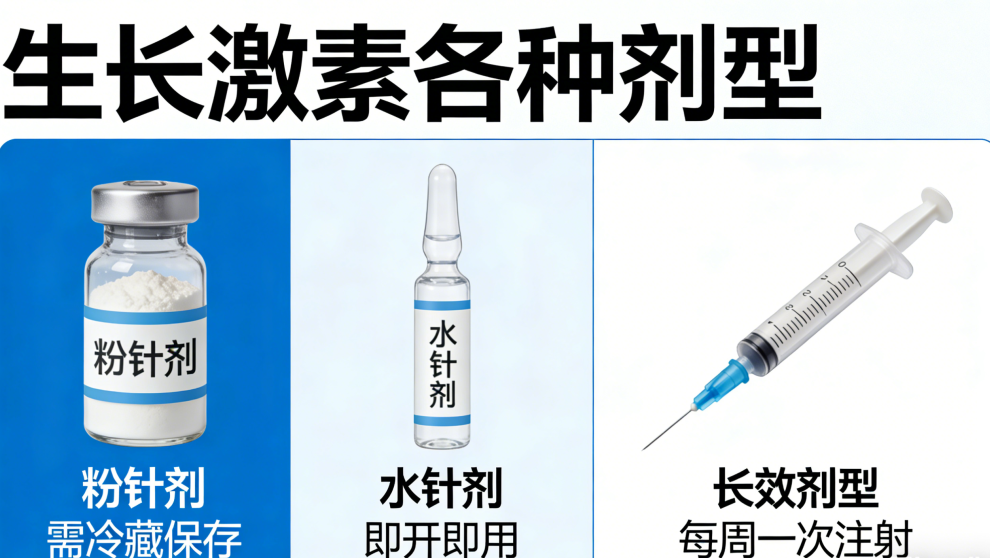
对比维度 | 粉剂 (第一代) | 水剂 (第二代) | 长效水剂 (第三代) |
便利性 (操作难度) | ★★☆☆☆ 手动溶解:需抽取溶媒、注入粉瓶、混匀、抽取药液。 易出错:气泡多、剂量不准、污染风险。 | ★★★★☆ 即取即用:预充式卡式瓶+电子笔。 一键注射:隐藏针头、剂量精准、痛感低。 | ★★★★★ 频率最低:一周仅需一次。 极大解放:孩子和家长心理负担最小。 |
稳定性与抗体风险 | ★★★☆☆ 结构易变:溶解过程可能导致少量蛋白质变性。 抗体风险:相对较高(但多数不影响疗效)。 | ★★★★★ 结构天然:保持天然生长激素空间结构。 纯度极高:抗体产生率极低,长期安全性数据最扎实。 | ★★★★☆ 经过修饰:通过PEG等技术延长半衰期。 安全性良好:目前数据显示抗体风险可控,但超长期数据仍在积累。 |
经济性 (治疗成本) | ★★★★★ 价格最低:单支成本最具优势。 适合预算有限、需长期治疗的家庭。 | ★★★☆☆价格适中:比粉剂贵,比长效便宜。是性价比的主流选择。 | ★★☆☆☆ 价格最高:单次注射费用高。需评估家庭长期经济承受能力。 |
适用人群画像 | 预算优先型:能熟练操作注射流程,对价格敏感。 | 平衡务实型:追求操作便利、高纯度、安全性,预算中等。 | 依从性优先型:孩子极度恐针、家长工作繁忙、预算充足。 |
图片来源:AI 生成
深度解析:每个维度的 "潜台词"
便利性:时间与心理的消耗战
粉剂:每天多花5-10分钟配药, 长期下来是巨大的时间成本。操作失误可能导致药物浪费
水剂:电子笔极大简化了流程, 适合快节奏生活
长效:最大的优势是 "频率"。对于青春期的孩子或抗拒打针的幼儿, 减少打针次数能显著提升治疗信心
稳定性: 抗体的 "隐形敌人"
核心概念:抗体是身体对药物产生的 "抵抗物质", 过高可能让药物失效。
粉剂:虽然抗体风险相对高, 但绝大多数孩子产生的抗体滴度很低, 不影响最终身高。定期监测即可。
水剂:目前的 "黄金标准", 杂质最少, 最不容易引起免疫反应。
长效:新技术, 长期免疫原性 (是否会产生抗体) 需要更长时间的观察。
经济性: 算好 "长期账"
粉剂:单价低, 但需额外购买注射器和溶媒。
水剂/长效: 单价高, 但包含了耗材和便利性成本。
关键: 生长激素治疗通常持续数年。请计算年度总费用, 而不仅仅是单支价格。
总的来说:
粉剂省钱, 水剂省心, 长效省事。
您的选择, 决定了未来几年家庭的生活节奏和经济支出。请务必在充分了解利弊后, 为孩子选择一条能坚持走下去的生长之路。
以上内容经壹童慧专家团队审核
参考文献
【1】Ranke, M. B., & Wit, J. M. (2018). Growth hormone - past, present and future. Nature Reviews Endocrinology, 14(5), 285-300.
【2】Milner, R. D., & Burns, E. C. (1982). Human growth hormone: from pituitary extract to recombinant DNA. Archives of Disease in Childhood, 57(6), 421-423.
【3】Fisher, B. G., & Acerini, C. L. (2013). Understanding the growth hormone therapy adherence paradigm: a systematic review. Hormone Research in Paediatrics, 79(4), 189-196.
【4】Haverkamp, F., & Gasteyger, C. (2011). A review of biopsychosocial strategies to prevent and overcome early-recognized poor adherence in growth hormone therapy of children. Journal of Medical Economics, 14(4), 448-457.
【5】Rasmussen, M. H., & Christiansen, J. S. (2000). Clinical pharmacology of recombinant human growth hormone: a review. Hormone Research, 54(Suppl 1), 11-18.
【6】Reiter, E. O., & Attie, K. M. (2008). Antibodies to growth hormone: a rare but important clinical consideration. Pediatric Endocrinology Reviews, 5(4), 970-975.
【7】Laursen, T., & Jørgensen, J. O. (2000). Clinical pharmacology of recombinant human growth hormone. Clinical Pharmacokinetics, 38(4), 303-318.
【8】de Schepper, J., Rasmussen, M. H., Gucev, Z., Eliakim, A., & Battelino, T. (2013). Long-acting growth hormone analog LB03002 in children with growth hormone deficiency: a randomized, controlled, phase II study. The Journal of Clinical Endocrinology & Metabolism, 98(7), 2765-2773.
【9】Tauber, M., Zadik, Z., & Thyroid, G. H. D. S. G. (2014). A randomized, controlled, phase III study of once-weekly somatrogon (hGH-CTP) compared with once-daily somatropin in children with growth hormone deficiency. Hormone Research in Paediatrics, 82(Suppl 1), 1-368.
【10】Cohen, P., Rogol, A. D., Deal, C. L., Saenger, P., Reiter, E. O., Ross, J. L., ... & Wit, J. M. (2008). Consensus statement on the diagnosis and treatment of children with idiopathic short stature: a summary of the Growth Hormone Research Society, the Lawson Wilkins Pediatric Endocrine Society, and the European Society for Paediatric Endocrinology Workshop. The Journal of Clinical Endocrinology & Metabolism, 93(11), 4210-4217.
【11】Allen, D. B., & Cuttler, L. (2013). Clinical practice. Short stature in childhood--challenges and choices. New England Journal of Medicine, 368(13), 1220–1228.